"Apoptosis — Bilingual Notes (English | ગુજરાતી)"
05 Oct 2026
15 min read
Apoptosis — Bilingual Notes (English | ગુજરાતી)
Apoptosis is regulated, programmed cell death: the cell dismantles itself from within and is eaten before its contents leak, so there is no inflammation.
1. Definition | વ્યાખ્યા
| English |
ગુજરાતી |
| Apoptosis is a tightly regulated "suicide program." The cell activates its own enzymes, which break down its DNA and its nuclear and cytoplasmic proteins. |
Apoptosis એ ચુસ્ત રીતે નિયંત્રિત "આત્મહત્યા કાર્યક્રમ" છે. તેમાં કોષ પોતાના જ એન્ઝાઇમ્સ સક્રિય કરે છે, જે તેના DNA અને nucleus તથા cytoplasm ના પ્રોટીનનું વિઘટન કરે છે. |
| The cell breaks into membrane-bound fragments called apoptotic bodies, which contain bits of cytoplasm and nucleus. |
કોષ membrane વડે ઘેરાયેલા ટુકડાઓમાં તૂટે છે, જેને apoptotic bodies કહે છે. તેમાં cytoplasm અને nucleus ના અંશ હોય છે. |
| The plasma membrane stays intact but displays "find me" and "eat me" signals. Phagocytes remove the cell before its contents leak out, so there is no inflammation. |
Plasma membrane અખંડ રહે છે, પણ તેની સપાટી પર "find me" અને "eat me" સંકેતો ઉભા થાય છે. અંદરના પદાર્થો બહાર નીકળે તે પહેલાં જ phagocytes કોષને ગળી જાય છે, તેથી inflammation થતું નથી. |
| It was first recognised in 1972 from its appearance under the microscope. The name comes from the Greek for "falling off." |
1972 માં તેના વિશિષ્ટ દેખાવ પરથી તેને પ્રથમ ઓળખવામાં આવ્યું. નામ ગ્રીક શબ્દ પરથી આવ્યું છે, જેનો અર્થ "ખરી પડવું" થાય છે. |
| In worms, certain cells were found to die at fixed times during development. This is called programmed cell death. It is controlled by a few genes and is essential for normal embryogenesis. |
Worms માં જોવા મળ્યું કે વિકાસ દરમિયાન ચોક્કસ સમયે અમુક કોષો મૃત્યુ પામે છે. આને programmed cell death કહે છે. તે થોડાક genes દ્વારા નિયંત્રિત છે અને સામાન્ય embryogenesis માટે આવશ્યક છે. |
2. Causes | કારણો
A. Physiologic | શારીરિક (સામાન્ય) પરિસ્થિતિઓ
| English |
ગુજરાતી |
| Apoptosis removes cells that are no longer needed and keeps cell numbers constant. The body turns over about 1 million cells per second. |
બિનજરૂરી કોષો દૂર કરે છે અને કોષોની સંખ્યા સ્થિર રાખે છે. શરીરમાં દર સેકન્ડે આશરે 10 લાખ કોષો બદલાય છે. |
| Development: removes excess (supernumerary) cells, causes primordial structures to involute, and remodels maturing tissues. "Apoptosis" is the general term; "programmed cell death" refers only to developmental apoptosis. |
વિકાસ: વધારાના (supernumerary) કોષો દૂર કરે છે, primordial રચનાઓનું involution કરે છે અને પરિપક્વ થતી પેશીઓનું remodeling કરે છે. "Apoptosis" સામાન્ય શબ્દ છે; "programmed cell death" ફક્ત વિકાસ દરમિયાનના apoptosis માટે વપરાય છે. |
| Hormone withdrawal: endometrial breakdown in the menstrual cycle, ovarian follicular atresia at menopause, and regression of the lactating breast after weaning. |
હોર્મોન ઘટવાથી: માસિક ચક્રમાં endometrium નું ભંગાણ, menopause માં ovarian follicular atresia, અને weaning પછી lactating breast નું regression. |
| Homeostasis in proliferating cells: for example, epithelium of the intestinal crypts. |
ઝડપથી વિભાજિત થતા કોષોમાં સંતુલન (homeostasis): દા.ત. આંતરડાના crypts નું epithelium. |
| Lymphocytes without functional antigen receptors are removed: immature lymphocytes in the marrow and thymus, and germinal centre B cells. |
કાર્યક્ષમ antigen receptor ન ધરાવતા lymphocytes નો નાશ થાય છે: bone marrow અને thymus ના અપરિપક્વ lymphocytes અને germinal center B cells. |
| Self-reactive lymphocytes are removed, which prevents autoimmunity. |
Self-reactive lymphocytes નો નાશ થાય છે, જેથી પોતાની જ પેશીઓ સામે પ્રતિક્રિયા અટકે. |
| Cells that have done their job die: neutrophils after acute inflammation and lymphocytes at the end of an immune response. |
કાર્ય પૂર્ણ કરી ચૂકેલા કોષો મૃત્યુ પામે છે: acute inflammation પછી neutrophils અને immune response ના અંતે lymphocytes. |
| Common reason: the cell loses survival signals (growth factors, contact with the extracellular matrix) or receives pro-apoptotic signals. |
સામાન્ય કારણ: કોષને survival signals (growth factors, extracellular matrix સાથે સંપર્ક) મળતા બંધ થાય છે, અથવા pro-apoptotic સંકેતો મળે છે. |
B. Pathologic | રોગજન્ય પરિસ્થિતિઓ
| English |
ગુજરાતી |
| Apoptosis removes cells injured beyond repair while causing minimal damage to surrounding tissue. |
સુધારી ન શકાય તેવા ક્ષતિગ્રસ્ત કોષોને આસપાસની પેશીને ઓછામાં ઓછું નુકસાન થાય તે રીતે દૂર કરે છે. |
| DNA damage: radiation and anticancer drugs damage DNA directly or through free radicals. If the damage cannot be repaired, the cell undergoes apoptosis, which prevents malignant transformation. |
DNA નુકસાન: Radiation અને anticancer દવાઓ સીધું અથવા free radicals દ્વારા DNA ને નુકસાન કરે છે. જો તે repair ન થાય તો કોષ apoptosis પામે છે, જે કેન્સર બનતું અટકાવે છે. |
| Misfolded proteins: their accumulation causes ER stress, which triggers apoptosis. |
Misfolded proteins: તેમના સંચયથી ER stress થાય છે, જે apoptosis શરૂ કરે છે. |
| Viral infections: caused by the virus itself (adenovirus, HIV) or by the immune response (viral hepatitis). CTLs kill infected cells, which can cause significant tissue damage. The same CTL mechanism kills tumour cells and causes transplant rejection and GVHD. |
વાઇરલ ચેપ: વાઇરસ પોતે (adenovirus, HIV) અથવા immune response (viral hepatitis) દ્વારા. CTLs ચેપગ્રસ્ત કોષોને મારે છે, જેથી પેશીને નોંધપાત્ર નુકસાન થઈ શકે. આ જ CTL પદ્ધતિ tumor કોષોનો નાશ કરે છે અને transplant rejection તથા GVHD માટે જવાબદાર છે. |
| Duct obstruction: causes pathologic atrophy of the pancreas, parotid and kidney. |
Duct obstruction: તેનાથી pancreas, parotid અને kidney માં pathologic atrophy થાય છે. |
3. Morphology | આકારવિજ્ઞાન
| English |
ગુજરાતી |
| Cell shrinkage: the cell becomes small, with dense, eosinophilic cytoplasm and tightly packed organelles. (In necrosis, the cell swells instead.) |
કોષ સંકોચન: કોષ નાનો થાય છે, cytoplasm ઘટ્ટ અને eosinophilic બને છે, અને organelles નજીક-નજીક ગોઠવાય છે. (Necrosis માં તેનાથી વિપરીત, કોષ ફૂલે છે.) |
| Chromatin condensation is the most characteristic feature. Dense chromatin masses collect at the periphery, just under the nuclear membrane, and the nucleus may break into fragments. |
Chromatin condensation એ સૌથી લાક્ષણિક લક્ષણ છે. ઘટ્ટ chromatin ના ગઠ્ઠા nuclear membrane ની નીચે, પરિઘ પર એકત્ર થાય છે, અને nucleus ટુકડામાં તૂટી શકે છે. |
| Blebs → apoptotic bodies: the surface first blebs, and then the cell breaks into membrane-bound fragments, with or without nuclear pieces. |
Blebs → apoptotic bodies: પહેલાં સપાટી પર blebs બને છે, પછી કોષ membrane-bound ટુકડાઓમાં તૂટે છે. તેમાં nuclear ટુકડા હોઈ પણ શકે અને ન પણ હોય. |
| Phagocytosis: macrophages ingest the fragments quickly and digest them with lysosomal enzymes. |
Phagocytosis: Macrophages ટુકડાઓને ઝડપથી ગળી જાય છે અને lysosomal enzymes વડે પચાવી નાખે છે. |
| On H&E: a round or oval, intensely eosinophilic cell containing fragments of dense nuclear chromatin. |
H&E માં: તીવ્ર eosinophilic, ગોળ અથવા અંડાકાર કોષ, જેમાં ઘટ્ટ nuclear chromatin ના ટુકડા હોય છે. |
| A lot of apoptosis can be missed on light microscopy because it is rapid, the fragments are cleared quickly, and there is no inflammation. |
Light microscopy માં ઘણું apoptosis દેખાતું નથી, કારણ કે પ્રક્રિયા ઝડપી છે, ટુકડા તરત સાફ થઈ જાય છે અને inflammation નથી હોતું. |
4. Mechanisms: Caspases and the Intrinsic Pathway | ક્રિયાવિધિ
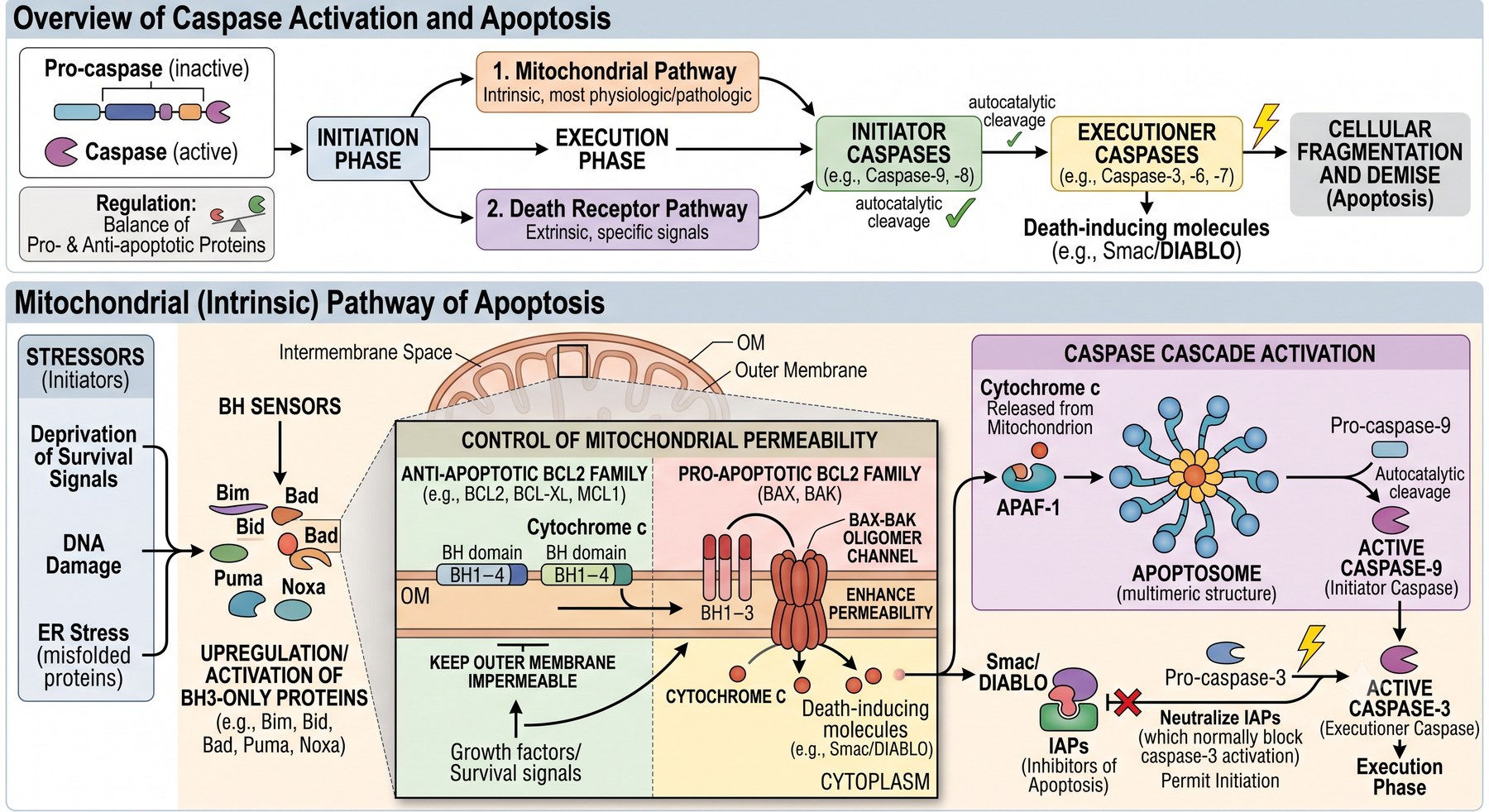
Figure 1. Top: the two pathways converge on initiator and then executioner caspases. Bottom: stressors raise BH3-only proteins, BAX–BAK open the outer mitochondrial membrane, and cytochrome c forms the apoptosome. Note: Smac/DIABLO is released from the mitochondria (bottom panel); it is not a product of the executioner caspases, as the top panel suggests.
Caspases
| English |
ગુજરાતી |
| Caspases are proteases with cysteine in their active site. They cut proteins after aspartate residues, which gives the name "c-asp-ase." |
Caspases એવા proteases છે જેમના active site માં cysteine હોય છે. તે aspartate પછી પ્રોટીન કાપે છે, તેથી નામ "c-asp-ase" પડ્યું. |
| They exist as inactive proenzymes and become active when cleaved. Active caspases are a marker of apoptosis. |
તે નિષ્ક્રિય proenzyme રૂપે હોય છે અને કપાવાથી સક્રિય થાય છે. સક્રિય caspases apoptosis નું marker છે. |
| Two phases: in the initiation phase, initiator caspases start a cascade; in the execution phase, terminal caspases break the cell apart. |
બે તબક્કા: Initiation phase માં initiator caspases cascade શરૂ કરે છે; execution phase માં terminal caspases કોષને તોડી નાખે છે. |
| The process depends on the balance of pro- and anti-apoptotic proteins. Two pathways lead to caspase activation: intrinsic (mitochondrial) and extrinsic (death receptor). |
પ્રક્રિયા pro- અને anti-apoptotic પ્રોટીનના સંતુલન પર આધાર રાખે છે. Caspase સક્રિય થવાના બે માર્ગ છે: intrinsic (mitochondrial) અને extrinsic (death receptor). |
Intrinsic (Mitochondrial) Pathway | આંતરિક માર્ગ
| English |
ગુજરાતી |
| This pathway causes most apoptosis, physiologic and pathologic. The outer mitochondrial membrane becomes more permeable and pro-apoptotic proteins leak into the cytoplasm. |
મોટાભાગનું apoptosis, શારીરિક અને રોગજન્ય બંને, આ માર્ગથી થાય છે. Outer mitochondrial membrane ની permeability વધે છે અને pro-apoptotic પ્રોટીન cytoplasm માં લીક થાય છે. |
| Cytochrome c is a double-edged sword: inside the mitochondria it is needed to make ATP; released into the cytoplasm, it starts the suicide program. |
Cytochrome c બેધારી તલવાર છે: Mitochondria ની અંદર તે ATP બનાવવા માટે જરૂરી છે; cytoplasm માં છૂટે તો આત્મહત્યા કાર્યક્રમ શરૂ કરે છે. |
| Membrane integrity is controlled by the BCL2 family (more than 20 members), named after the BCL2 gene that is overexpressed through translocation in some B-cell lymphomas. |
Membrane ની અખંડતા BCL2 family (20 થી વધુ સભ્યો) નિયંત્રિત કરે છે. નામ BCL2 gene પરથી છે, જે કેટલાક B-cell lymphomas માં translocation ને કારણે વધુ પ્રમાણમાં બને છે. |
BCL2 family groups | BCL2 family ના જૂથો
| Group / જૂથ |
Members |
BH domains |
Role / કાર્ય |
| Anti-apoptotic |
BCL2, BCL-XL, MCL1 |
BH1–4 |
Keep the outer mitochondrial membrane impermeable / Outer mitochondrial membrane ને અભેદ્ય રાખે છે, જેથી cytochrome c લીક ન થાય |
| Pro-apoptotic |
BAX, BAK |
BH1–3 |
Oligomerize and increase permeability, possibly as a channel / Oligomer બનાવી permeability વધારે છે (કદાચ channel બનાવીને; ચોક્કસ પદ્ધતિ હજુ નક્કી નથી) |
| BH3-only (initiators) |
BAD, BIM, BID, Puma, Noxa |
BH3 only |
Sense stress and damage, then start apoptosis / Stress અને નુકસાનને ઓળખી apoptosis શરૂ કરે છે |
Sequence | ક્રમ
| English |
ગુજરાતી |
| Survival signals (such as growth factors) raise BCL2 levels, so the cell is protected. |
Survival signals (જેમ કે growth factors) BCL2 નું પ્રમાણ વધારે છે, તેથી કોષ સુરક્ષિત રહે છે. |
| Loss of survival signals, DNA damage or ER stress raises BH3-only proteins, through more transcription and phosphorylation. |
Survival signals ન મળે, DNA નુકસાન થાય, અથવા ER stress થાય તો BH3-only proteins વધે છે (transcription અને phosphorylation દ્વારા). |
| BH3-only proteins activate BAX and BAK and block BCL2 and BCL-XL. BCL2 synthesis also falls, because it depends on survival signals. |
BH3-only proteins BAX અને BAK ને સક્રિય કરે છે અને BCL2 તથા BCL-XL ને અવરોધે છે. BCL2 નું ઉત્પાદન પણ ઘટે છે, કારણ કે તે survival signals પર આધારિત છે. |
| Net result: cytochrome c and other mitochondrial proteins leak into the cytoplasm. |
પરિણામે cytochrome c અને અન્ય mitochondrial proteins cytoplasm માં લીક થાય છે. |
| Cytochrome c + APAF-1 → apoptosome, which activates caspase-9, the initiator caspase of this pathway. Caspase-9 then activates caspase-3 and others. |
Cytochrome c + APAF-1 → apoptosome, જે caspase-9 (આ માર્ગનું initiator caspase) ને સક્રિય કરે છે. Caspase-9 પછી caspase-3 અને અન્યને સક્રિય કરે છે. |
| Smac/DIABLO is also released and neutralizes IAPs (inhibitors of apoptosis), which normally block caspases. With IAPs blocked, the cascade proceeds. |
Smac/DIABLO પણ મુક્ત થાય છે અને IAPs (inhibitors of apoptosis) ને નિષ્ક્રિય કરે છે, જે સામાન્ય રીતે caspases ને અવરોધે છે. IAPs અવરોધાતાં cascade આગળ વધે છે. Smac/DIABLO (Second mitochondria-derived activator of caspase / Direct inhibitor of apoptosis-binding protein with low pI) એ mitochondria માં રહેલું એક pro-apoptotic પ્રોટીન છે. વિવિધ apoptotic ઉત્તેજનાઓના પ્રતિભાવમાં તે cytosol માં મુક્ત થાય છે. આ ઉત્તેજનાઓમાં સામાન્ય રીતે વપરાતી chemotherapeutic દવાઓનો પણ સમાવેશ થાય છે. |
Cytosol માં Smac/DIABLO, inhibitors of apoptosis proteins (IAPs) સાથે જોડાઈને તેમની અસરનો વિરોધ કરે છે. આથી caspases સક્રિય થઈ શકે છે અને apoptosis થાય છે.
આ ગુણધર્મને કારણે એવા peptidomimetics (Smac જેવું કાર્ય કરતા કૃત્રિમ અણુઓ) બનાવવામાં આવ્યા છે, જેનો ભવિષ્યમાં કેન્સરની સારવારમાં ઉપયોગ થઈ શકે.
આ જ કારણોસર ઘણા સંશોધકોએ જુદા જુદા પ્રકારના tumors ધરાવતા દર્દીઓના નમૂનાઓમાં Smac/DIABLO ના expression levels નો અભ્યાસ કર્યો છે. પરિણામો એકસરખા મળ્યા નથી. તેમ છતાં, ઉપલબ્ધ માહિતી પરથી સંકેત મળે છે કે આ પ્રોટીનની ભૂમિકા પેશી-વિશિષ્ટ (tissue-specific) છે. |
5. Extrinsic (Death Receptor) Pathway | બાહ્ય માર્ગ
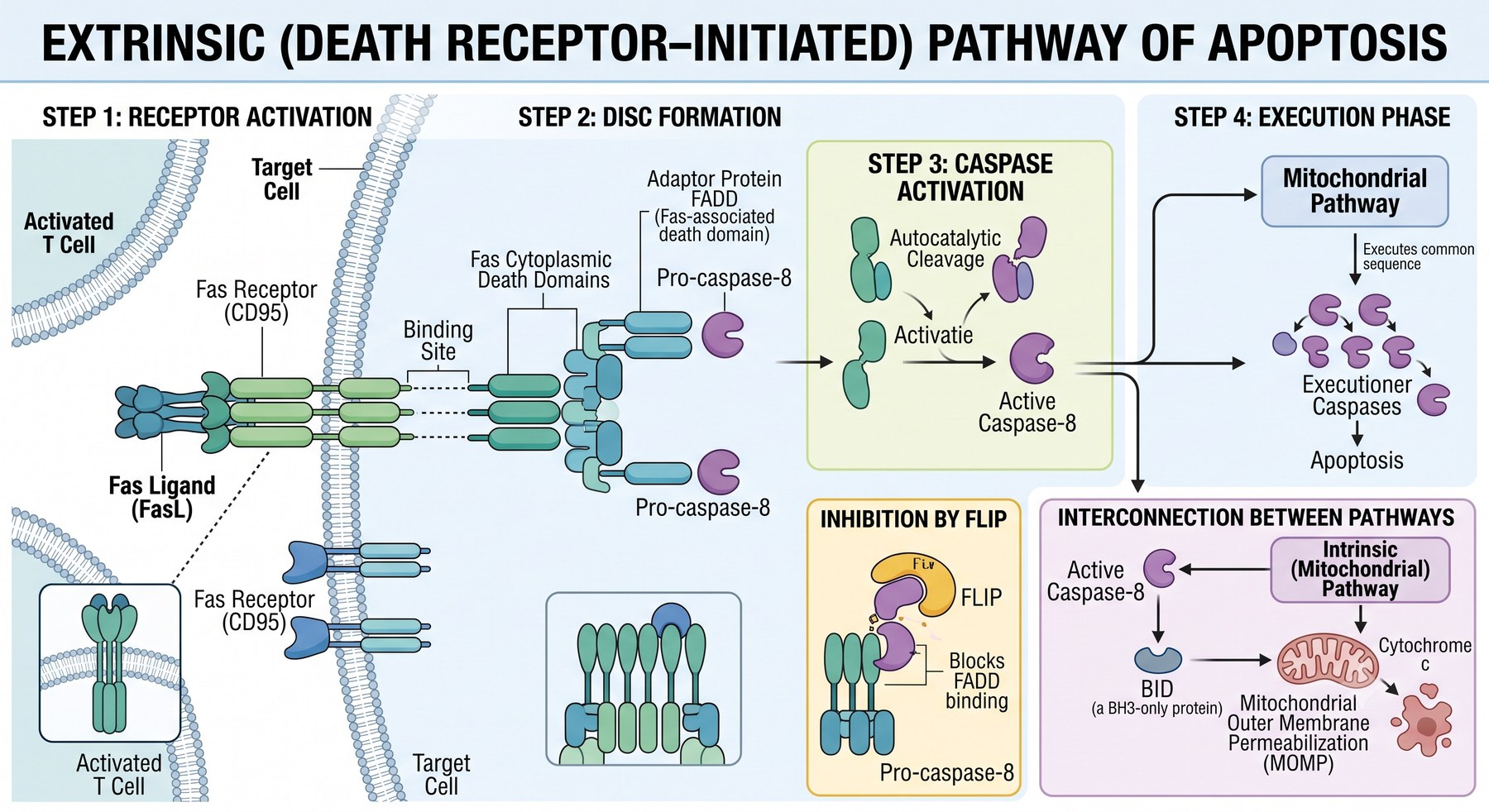
Figure 2. FasL on a T cell binds Fas on the target cell, the death domains recruit FADD and pro-caspase-8, and active caspase-8 starts the executioner cascade. FLIP blocks this step; caspase-8 can also cleave BID to recruit the mitochondrial pathway. Note: in the crosstalk panel the signal runs caspase-8 → BID → mitochondria, not from the intrinsic pathway towards caspase-8.
| English |
ગુજરાતી |
| Death receptors belong to the TNF receptor family and have a cytoplasmic death domain. TNFR members without this domain mainly drive inflammation instead. |
Death receptors TNF receptor family ના સભ્યો છે અને તેમાં cytoplasmic death domain હોય છે. આ domain વગરના TNFR સભ્યો મુખ્યત્વે inflammation સક્રિય કરે છે. |
| The best-known death receptors are TNFR1 and Fas (CD95). |
સૌથી જાણીતા death receptors TNFR1 અને Fas (CD95) છે. |
| FasL is found on T cells that recognise self-antigens (to remove self-reactive lymphocytes) and on some CTLs (to kill virus-infected and tumour cells). |
FasL self-antigen ઓળખતા T cells પર (self-reactive lymphocytes નો નાશ કરવા) અને કેટલાક CTLs પર (વાઇરસગ્રસ્ત અને tumor કોષોને મારવા) હોય છે. |
| Steps: FasL binds Fas → three or more Fas molecules cluster → their death domains bind FADD → FADD recruits pro-caspase-8 (or 10) → autocatalysis gives active caspase-8 → the same executioner cascade. |
પગલાં: FasL, Fas સાથે જોડાય છે → ત્રણ કે વધુ Fas અણુઓ ભેગા થાય છે → death domains FADD ને જોડે છે → FADD, pro-caspase-8 (અથવા 10) ને લાવે છે → autocatalysis દ્વારા સક્રિય caspase-8 → એ જ executioner cascade. |
| FLIP binds pro-caspase-8 and blocks FADD binding. Some viruses and normal cells use FLIP to protect themselves from Fas-mediated death. |
FLIP, pro-caspase-8 સાથે જોડાઈ FADD ને જોડાતું અટકાવે છે. કેટલાક વાઇરસ અને સામાન્ય કોષો Fas-મધ્યસ્થ મૃત્યુથી બચવા FLIP નો ઉપયોગ કરે છે. |
| Crosstalk: in hepatocytes and pancreatic β cells, caspase-8 cleaves BID, which feeds into the mitochondrial pathway. Together the two pathways deliver a fatal double hit. |
બંને માર્ગનું જોડાણ: Hepatocytes અને pancreatic β cells માં caspase-8, BID ને કાપે છે, જે mitochondrial માર્ગ સક્રિય કરે છે. બંને માર્ગ સાથે મળી ઘાતક બેવડો ફટકો આપે છે. |
6. Execution and Removal | અમલીકરણ અને નિકાલ
Execution phase | અમલીકરણ તબક્કો
| English |
ગુજરાતી |
| Initiator caspases are caspase-9 (intrinsic) and caspase-8 and -10 (extrinsic). They activate the executioner caspases, caspase-3 and -6. |
Initiator caspases caspase-9 (intrinsic) અને caspase-8 તથા -10 (extrinsic) છે. તે executioner caspases, એટલે કે caspase-3 અને -6, ને સક્રિય કરે છે. |
| Executioner caspases cleave a DNase inhibitor, which frees the DNase to degrade DNA. They also cut the nuclear matrix, which fragments the nucleus. |
Executioner caspases DNase inhibitor ને કાપે છે, જેથી DNase મુક્ત થઈ DNA નું વિઘટન કરે છે. તે nuclear matrix ને પણ કાપે છે, જેથી nucleus ટુકડામાં તૂટે છે. |
| How blebs and apoptotic bodies form is still not known. |
Blebs અને apoptotic bodies કેવી રીતે બને છે તે હજુ જાણીતું નથી. |
Removal of dead cells | મૃત કોષોનો નિકાલ
| English |
ગુજરાતી |
| Apoptotic bodies are "bite-sized" pieces that are easy for phagocytes to eat. |
Apoptotic bodies "એક કોળિયા" જેવા ટુકડા છે, જે phagocytes સરળતાથી ખાઈ શકે છે. |
| Phosphatidylserine normally sits on the inner leaflet of the membrane. In apoptosis it flips to the outer leaflet, where macrophage receptors recognise it. |
Phosphatidylserine સામાન્ય રીતે membrane ના અંદરના સ્તર પર હોય છે. Apoptosis માં તે બહારના સ્તર પર પલટાય છે, જ્યાં macrophage receptors તેને ઓળખે છે. |
| Dying cells release soluble factors that attract phagocytes. Some macrophage proteins bind only apoptotic cells. Natural antibodies and complement C1q also coat apoptotic bodies. All act as "eat me" signals. |
મરતા કોષો soluble factors છોડે છે, જે phagocytes ને આકર્ષે છે. કેટલાક macrophage પ્રોટીન ફક્ત apoptotic કોષો સાથે જોડાય છે. Natural antibodies અને complement C1q પણ apoptotic bodies ને ઢાંકે છે. આ બધા "eat me" સંકેતો તરીકે કામ કરે છે. |
| This engulfment is called efferocytosis. Cells disappear within minutes, and macrophages that ate apoptotic cells make fewer proinflammatory cytokines, so there is no inflammation. |
આ ગળી જવાની પ્રક્રિયાને efferocytosis કહે છે. કોષો મિનિટોમાં અદૃશ્ય થઈ જાય છે, અને apoptotic કોષો ખાધા પછી macrophages ઓછા proinflammatory cytokines બનાવે છે, તેથી inflammation થતું નથી. |
7. Key Concepts | મુખ્ય મુદ્દાઓ
| English |
ગુજરાતી |
| Apoptosis is regulated cell death that removes unwanted or irreparably damaged cells with minimal host reaction. |
Apoptosis એ નિયંત્રિત કોષ-મૃત્યુ છે, જે બિનજરૂરી અથવા સુધારી ન શકાય તેવા કોષોને ઓછામાં ઓછી પ્રતિક્રિયા સાથે દૂર કરે છે. |
| Its hallmarks are caspase-driven breakdown of proteins and DNA, and clearance of the dead cells by phagocytes. |
તેના મુખ્ય લક્ષણો caspases દ્વારા પ્રોટીન અને DNA નું વિઘટન અને phagocytes દ્વારા મૃત કોષોનો નિકાલ છે. |
| Intrinsic pathway: triggered by loss of survival signals, DNA damage or ER stress. Pro-apoptotic proteins leak from mitochondria and activate caspases. Inhibited by anti-apoptotic BCL2 proteins, which survival signals induce. |
Intrinsic માર્ગ: Survival signals ગુમાવવાથી, DNA નુકસાનથી અથવા ER stress થી શરૂ થાય છે. Mitochondria માંથી pro-apoptotic પ્રોટીન લીક થઈ caspases સક્રિય કરે છે. Survival signals થી વધતા anti-apoptotic BCL2 પ્રોટીન તેને અવરોધે છે. |
| Extrinsic pathway: removes self-reactive lymphocytes and is how CTLs kill. It starts when ligands (soluble or on neighbouring cells) bind death receptors of the TNF receptor family. |
Extrinsic માર્ગ: Self-reactive lymphocytes નો નાશ કરે છે અને CTLs તેના વડે કોષોને મારે છે. Soluble અથવા પડોશી કોષોની સપાટી પરના ligands, TNF receptor family ના death receptors સાથે જોડાય ત્યારે તે શરૂ થાય છે. |